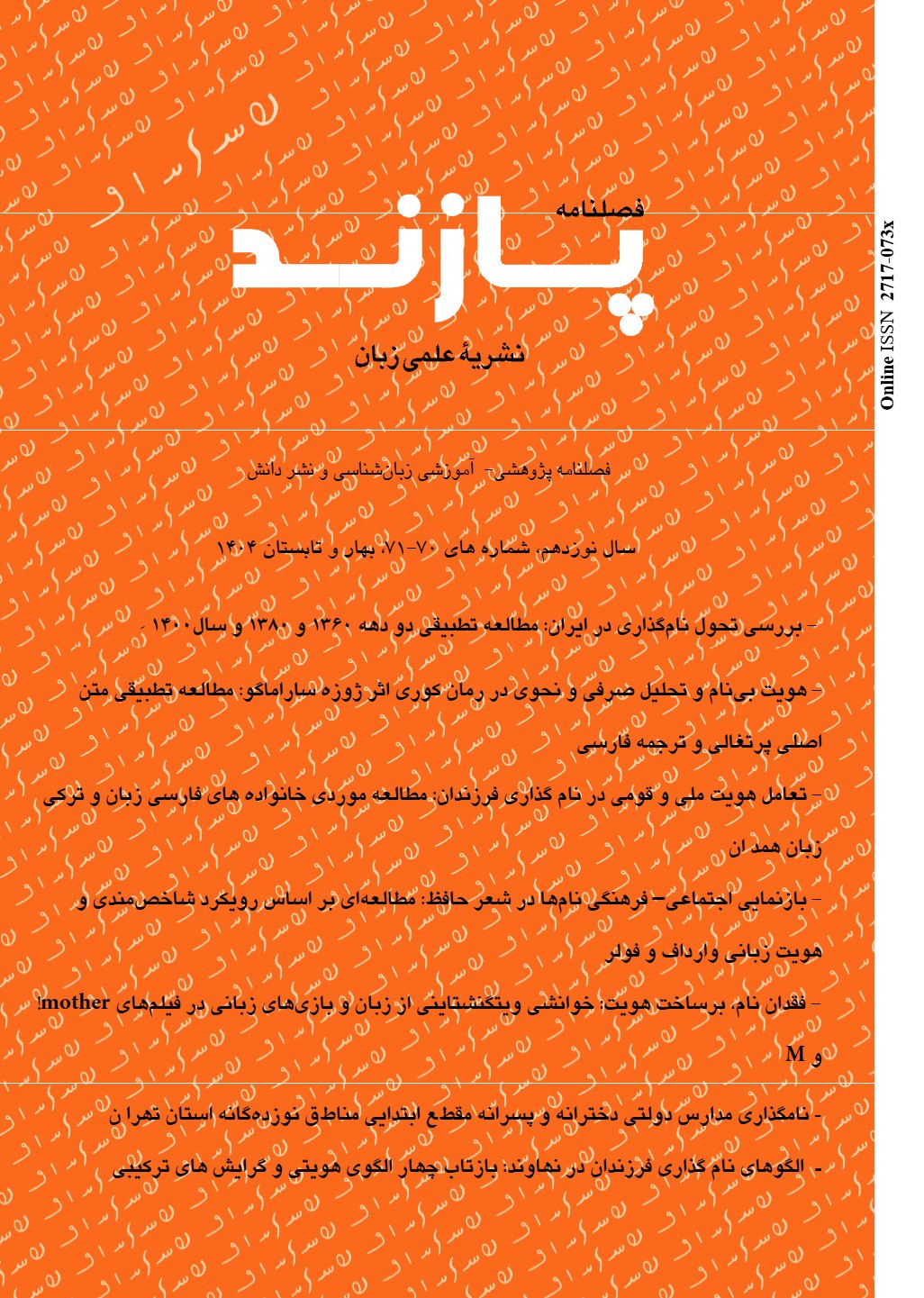
الگوهای نام‌گذاری فرزندان در نهاوند: بازتاب چهار الگوی هویتی و گرایش‌های ترکیبی

نوع مقاله : مقاله پژوهشی

نویسندگان
1 دانشیار گروه زبان‌شناسی، دانشگاه پیام نور، تهران، ایران
2 گروه زبان انگلیسی و زبان شناسی، واحد علوم تحقیقات، دانشگاه آزاد اسلامی، تهران
چکیده
نام کوچک افراد به عنوان یکی از بارزترین نمادهای هویت فردی و اجتماعی شناخته می‌شود که بازتاب‌دهنده باورها، ارزش‌ها، موقعیت فرهنگی و طبقاتی فرد و خانواده و حتی الگوی فرزندآوری در ساختارهای اجتماعی است. فرایند نام‌گذاری، فراتر از یک انتخاب صِرف، به مثابه کنشی زبان‌شناختی-فرهنگی مطرح است که بازنمایی پیچیده‌ای از هویت‌های فردی و جمعی را به نمایش می‌گذارد. در پژوهش حاضر با اتخاذ رویکرد زبان‌شناسی اجتماعی، نظام‌های نام‌گذاری نوجوانان شهر نهاوند بررسی می­شود. هدف این پژوهش شناسایی و تحلیل رابطه میان انتخاب نام، هویت فرهنگی و طبقه اجتماعی است. برای دستیابی به این هدف، در سال 1403 داده‌ها از طریق گردآوری فهرست اسامی دانش‌آموزان دوره‌های متوسطه اول و دوم، در مدارس دولتی و غیردولتی نهاوند جمع‌آوری شده‌اند. علاوه بر این، مصاحبه‌های نیمه‌ساختاریافته با والدین و معلمان انجام شده است تا دیدگاه‌های جامع‌تری نسبت به انگیزه‌ها و الگوهای انتخاب نام به دست آید. تحلیل داده‌ها بر اساس معیارهای منشأ زبانی، بار فرهنگی، گرایش‌های مذهبی و موقعیت جغرافیایی (شهر و روستا) صورت پذیرفته است. یافته‌ها نشان می‌دهد که الگوهای نام‌گذاری در نهاوند عمدتاً بر چهار محور مذهبی، سنتی، قومی و ایرانی استوار هستند که هر یک نمایانگر ابعاد متنوع هویت‌های فرهنگی و اجتماعی نوجوانان است. همچنین، نتایج حاکی از ظهور و گسترش الگوهای ترکیبی نام‌گذاری است که ناشی از تغییرات در الگوی فرزندآوری و تنوع فرهنگی جامعه است. این پژوهش بر اهمیت نام‌گذاری به عنوان ابزاری کلیدی در بازنمایی هویت نوجوانان ایرانی تأکید می‌کند.
کلیدواژه‌ها

عنوان مقاله English

Naming Patterns of Children in Nahavand: Reflections of Four Identities and Hybrid Tendencies

نویسندگان English

Ali Reza Gholi Famian 1
Maryam Keshvari 2
1 Department of Linguistics, Payame Noor University
2 Department of English Language and Linguistics,, Islamic Azad University, , Branch of Science and Research , Tehran
چکیده English

Given names are recognized as one of the most prominent symbols of individual and social identity, reflecting not only the beliefs, values, and cultural and class positions of individuals and their families but also the patterns of childbearing within social structures. The process of naming goes beyond a mere choice and is considered a sociolinguistic-cultural act that presents a complex representation of both individual and collective identities. This study, adopting a sociolinguistic approach, examines the naming systems of adolescents in the city of Nahavand, aiming to identify and analyze the relationship between name selection, cultural identity, and social class. To achieve this objective, data were collected in 2024 by compiling lists of students’ names from lower and upper secondary schools in both public and private institutions in Nahavand. Additionally, semi-structured interviews were conducted with parents and teachers to gain a more comprehensive understanding of the motivations and patterns behind name choices. The data analysis was based on criteria such as linguistic origin, cultural connotation, religious tendencies, and geographical location (urban and rural). The findings indicate that naming patterns in Nahavand are primarily grounded in four main dimensions: religious, traditional, ethnic, and Iranian, each reflecting diverse aspects of the cultural and social identities of adolescents. Moreover, the results suggest the emergence and expansion of hybrid naming patterns, which stem from changes in child bearing practices and the increasing cultural diversity within the society. This study emphasizes the significance of naming as a key tool in representing the identity of Iranian adolescents.

کلیدواژه‌ها English

given name
identity
hybrid tendency
teenagers
Nahavand